



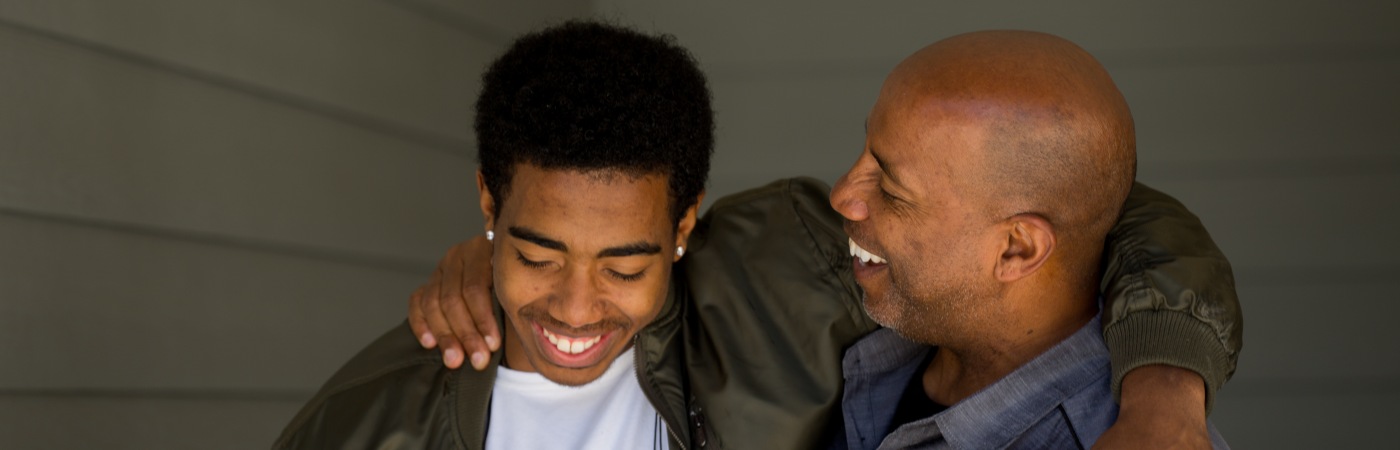
Early summer is a valuable time for parents and young people to prepare for the transition to college in the fall.
As first-year college students arrive on campus every fall, a predictable pattern unfolds. Rates of heavy drinking spike, social pressures intensify, and the risk of sexual assault, injury and other harms increases.
Many parents feel trepidation about their teens navigating this landscape of opportunity and risk. And unfortunately, too often, students don’t receive guidance from schools or caregivers as they make this major life transition.
Research suggests that the summer before college can be a critical window to help students prepare for the social and emotional realities they are about to face, and to reduce risks before they begin. And parents and caregivers can play a key role.
We are a sociologist and a research scientist, and each of us studies different aspects of prevention science.
When we went to college in the 1980s and early 2000s, the dominant message to families was to step back and let students figure things out on their own, and we struggled to adjust. Looking back, we wish our families had received clear guidance and resources for how to stay connected and support us during this transition.
A perfect storm
While students may legally be adults when they leave for college, key parts of the brain – particularly those involved in judgment, impulse control, emotional regulation and decision-making – are still developing well into their mid-20s. At the same time, the parts of the brain tied to reward, emotion and social belonging are especially sensitive during this stage of life.
This combination can make young people more likely to prioritize immediate rewards, peer acceptance and emotional reactions over careful assessments of risk – especially in environments with fewer guardrails and greater access to alcohol and other drugs.
Students are also navigating enormous change: separation from family, pressure to fit in, loneliness, uncertainty and the challenge of building a new identity and social network. Even positive transitions such as moving or getting a new job can create significant stress.
Many students turn to alcohol and other substances to manage stress, reduce anxiety and navigate social belonging in environments where substance use is often normalized – or even expected.
Unfortunately, substance use impairs judgment, increases impulsivity and amplifies vulnerability to a range of other high-risk behaviors and harms. And this struggle, as one of us, Beverly Kingston, experienced, can be more than a phase.
The risks are real, but they can be addressed
The spike in drinking and other risky behaviors during the transition to college is not inevitable. And parents and other adults in young peoples’ lives matter during this developmental transition to adulthood, more than many realize.
For instance, research clearly shows that parents’ attitudes and norms around drinking play a big role in how their children engage with alcohol, both as teens and in adulthood. When students believe their parents are permissive about alcohol, they are more likely to drink and binge-drink.
Even well-intended efforts to encourage “safe” drinking send the wrong message. Many parents believe letting teens drink at home in a supervised environment is safer, but decades of research in the U.S. and internationally show that this unintentionally signals to teens that drinking is acceptable and contributes to higher alcohol use later on.
Yet when parents communicate clear expectations and have honest conversations about alcohol, it can reduce risk and support healthier decision-making. Conversations about binge drinking, peer pressure, stress and decision-making can help students navigate environments where alcohol use is often normalized.
One of us, Clara Hill, works on research related to a tool for navigating these conversations, a parent handbook called “First Years Away from Home: Letting Go and Staying Connected.” In a randomized clinical trial, the most rigorous type of research study available, students whose parents used this handbook during the summer before college were significantly less likely to start or increase substance use during their first semester.
However, the focus of the handbook is not only on substance use. It also serves as a tool kit to guide parents in talking to their young adults about values, expectations and relationships.
Support, not surveillance
Many students say they want their parents involved in their lives – just not overly involved. They want emotional connection, guidance and support while also being trusted to grow into independent young adults.
To achieve this balance, parents may find it helpful to think of themselves as holding three important roles during the college years. These roles are the cheerleader, who provides emotional support; the coach, who supports autonomy by helping students clarify their values and problem-solve; and the safety monitor, who communicates clear expectations around issues of potential harm and checks in about health and risk behaviors.
Different scenarios – roommate conflicts, poor grades, mental health struggles – will call for parents to embody new parenting roles during this time, distinct from what children needed during adolescence or childhood.
Support can begin with honest conversations before students ever arrive on campus. Parents can talk with their students about stress, loneliness, belonging, alcohol and substance use, relationships, values, safety and how to respond when things do not go as planned.
Looking back, both of us entered college carrying expectations and fears we did not fully understand. When the transition became harder than expected, it fell to us to navigate loneliness, uncertainty and the pressure to fit in.
Finding the right balance
Parents, too, often feel adrift; they want to help, but may receive mixed messages from the media and from colleges about how much they should be involved in their new college student’s life.
Feeling pressure to optimize their young adult children’s success, while also being cautioned against “helicopter parenting,” can lead parents to step back more than necessary when it comes to offering guidance and support.
Today, researchers know much more about what helps young people navigate this major life transition and thrive. Students do not stop needing support when they leave home, and parents do not have to disappear in the name of independence; parents can lovingly support young adults’ growing autonomy.
When students are surrounded by connection, guidance and support, the transition to college can be healthier, safer and less overwhelming. And the time to begin building that support is before students ever arrive on campus.
Beverly Kingston, Director and Senior Research Associate, Center for the Study and Prevention of Violence, University of Colorado Boulder and Clara Hill, Research Associate in Human Development, Washington State University
This article is republished from The Conversation under a Creative Commons license. Read the original article.